
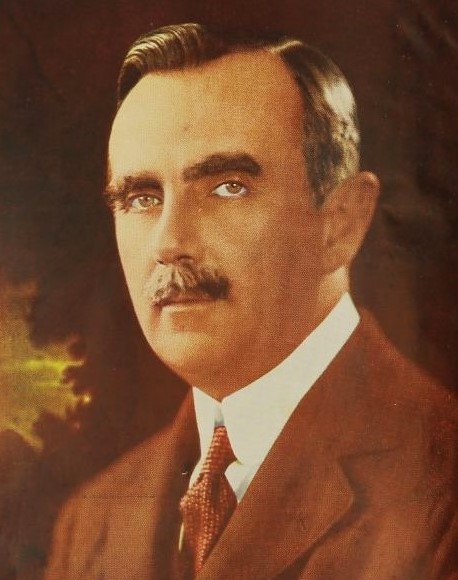
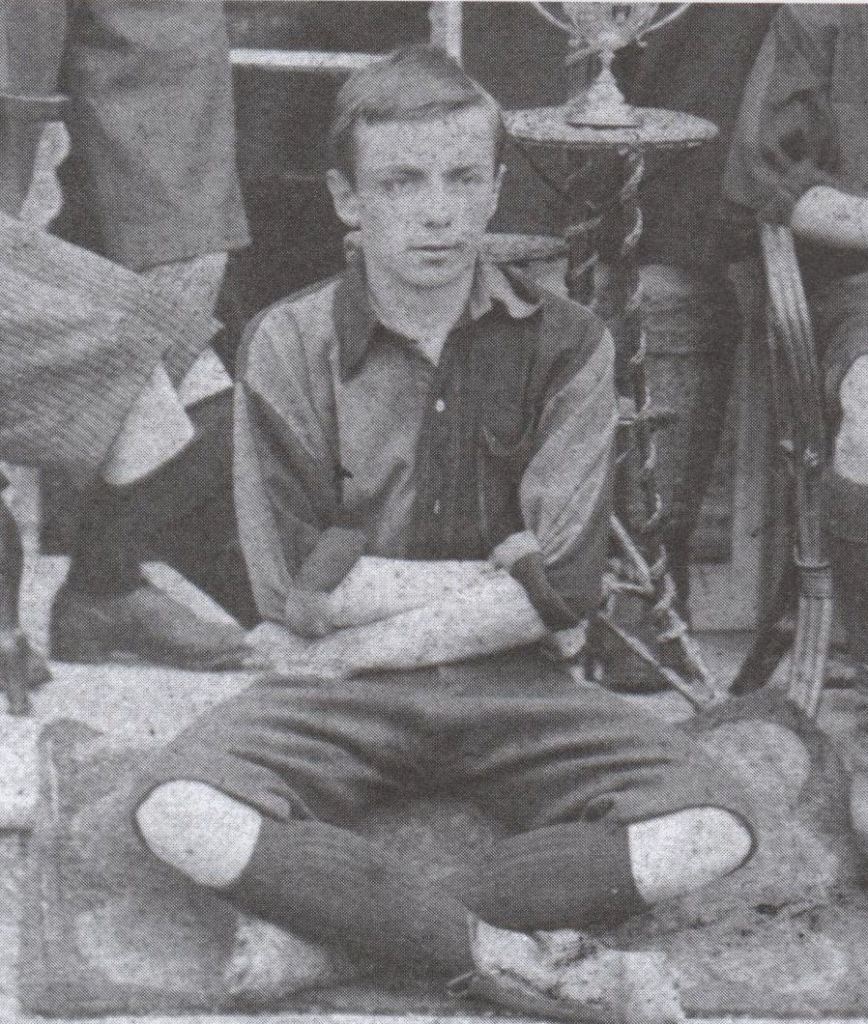
Brazil is known as a football powerhouse, with five World Cup titles and legendary players like Pele and Neymar. But how did this passion for the beautiful game start in the South American country? The answer lies in the story of Charles William Miller, a Brazilian-born sportsman who brought football from England to Brazil in the late 19th century.
The early life of Charles
Charles William Miller was born in São Paulo in 1874, to a Scottish father and a Brazilian mother of British descent. His father, John Miller, was an engineer who worked on railway projects in Brazil. His mother, Carlota Fox, was a descendant of a prominent British family in São Paulo.
When Charles was nine years old, his parents decided to send him to England to study, as many British expat families did at the time. He boarded a ship from Santos, a small port in São Paulo, and arrived in Southampton, a bustling city in the south of England.
There, he enrolled in Bannister Court School, an elite institution that followed the Victorian curriculum. He excelled in sports, especially cricket and football. He joined the local teams of Corinthians and St. Mary’s (now Southampton FC), and developed his skills as a striker and a winger. He also learned the rules and regulations of the Hampshire Football Association, which he would later use to introduce football in Brazil.
Bringing football to Brazil
In 1894, Charles returned to Brazil, carrying a football, a ball pump, and the Hampshire FA rulebook in his suitcase. He was eager to share his love for the game with his friends and colleagues in São Paulo.
He founded the São Paulo Athletic Club (SPAC), one of the oldest sports clubs in Brazil, and created a football division within it. He taught the rules and techniques of the game to a group of young men, mostly British expats and Brazilian elites, who became the first football players in Brazil.
He also organized the first official football match in Brazil, between SPAC and the Gas Company, another club formed by British workers. The match took place on 14 April 1895, at the Várzea do Carmo, a patch of land near a railway station. Charles scored two goals and led SPAC to a 4-2 victory.
He did not stop there. He decided to turn the informal games into a more serious competition, and established the Liga Paulista de Foot-Ball (LPF), the first football league in Brazil. He also invited other clubs to join the league, such as Mackenzie College, Germânia, Internacional, and Paulistano.
He was the star player of SPAC, and won the first three editions of the LPF, in 1902, 1903, and 1904. He scored 37 goals in 53 matches, and became the top scorer of the league in 1904. He also played for the São Paulo state team, and represented Brazil in two unofficial matches against Argentina in 1914.
The legacy of Charles
Charles William Miller is widely regarded as the father of football in Brazil, as he was the pioneer who introduced and popularized the game in the country. He also contributed to the development and diffusion of the sport, by creating clubs, leagues, and tournaments, and by coaching and refereeing.
He influenced the style and culture of Brazilian football, by bringing the Corinthian spirit of fair play, amateurism, and elegance. He also encouraged the participation of Brazilians of different social classes and ethnic backgrounds, breaking the barriers of elitism and racism that initially surrounded the game.
He witnessed the growth and success of Brazilian football, from its humble beginnings to its first World Cup title in 1958. He died in 1953, at the age of 78, in São Paulo. He was honored by the Brazilian Football Confederation, which named the trophy of the Campeonato Brasileiro, the national league, after him.
He is a legend in the sport, and a symbol of the bond that football can create between people and nations.




 Saints Archive
Leave a comment